Lubricant Functions in Machinery: How Base Oils and Additives Dictate the Right Engine Oil, Gear Oil, or Transmission Fluid
Lubricants perform six distinct functions in machinery: friction reduction, wear prevention, heat removal, contamination transport, sealing, and corrosion protection. These functions are not equally weighted in every application. A turbocharged diesel engine at sustained load prioritizes heat removal and oxidation stability. A mining truck's differential prioritizes extreme-pressure wear prevention. A stop-start delivery fleet prioritizes corrosion protection and contamination transport. Choosing a lubricant by brand or viscosity grade alone ignores which function matters most—and that oversight leads to premature wear, overheating, or deposit formation.
Each function is delivered by a combination of base oil properties (viscosity index, volatility, oxidation stability) and additive chemistry (anti-wear, extreme-pressure, detergent/dispersant, antioxidant, corrosion inhibitor). The same base oil can behave very differently depending on its additive package. Two oils with identical 15W-40 viscosity grades can perform completely differently in an engine versus a gearbox because the additive chemistry is tuned for different dominant functions. This is why a gear oil's EP package is not appropriate for an engine oil, and vice versa.
When you evaluate a lubricant, start by identifying the dominant function for your application. Then verify that the product's base oil and additive package are formulated to deliver that function. The sections below break down each function at the formulation level and map it to specific automotive lubricant categories.
Friction and Wear Control: How Anti-Wear and Extreme-Pressure Additives Actually Work
Friction reduction and wear prevention operate through different mechanisms depending on the lubrication regime. In hydrodynamic lubrication—where a full fluid film separates surfaces—friction is primarily a base oil viscosity problem. Lower-viscosity base oils reduce hydrodynamic friction because less energy is lost to fluid shear. In boundary lubrication—where surfaces contact asperities under high load—friction modifiers (such as molybdenum-based compounds) and anti-wear additives take over.
Wear prevention in moderate-load conditions relies on anti-wear additives like zinc dialkyldithiophosphate (ZDDP). These additives form a sacrificial tribofilm on metal surfaces that shears instead of the base metal. In high-load, shock-loaded conditions—gears, bearings, heavily loaded cams—extreme-pressure (EP) additives (typically sulfur-phosphorus chemistry) react at higher temperatures to prevent scuffing and welding. The EP film is more chemically reactive than an anti-wear film, which is why EP additives are used in gear oils but not in engine oils where they could corrode bearings.
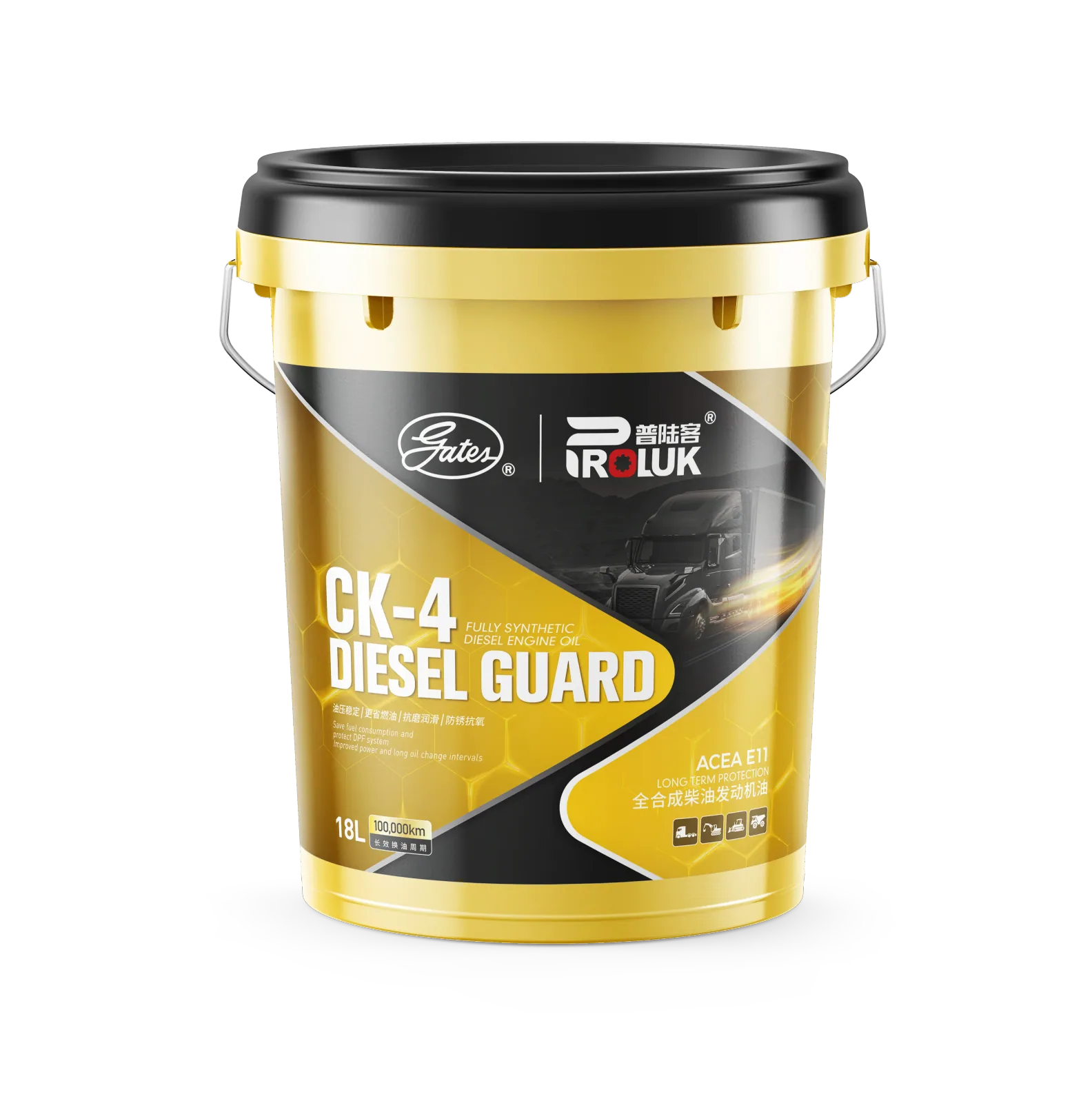
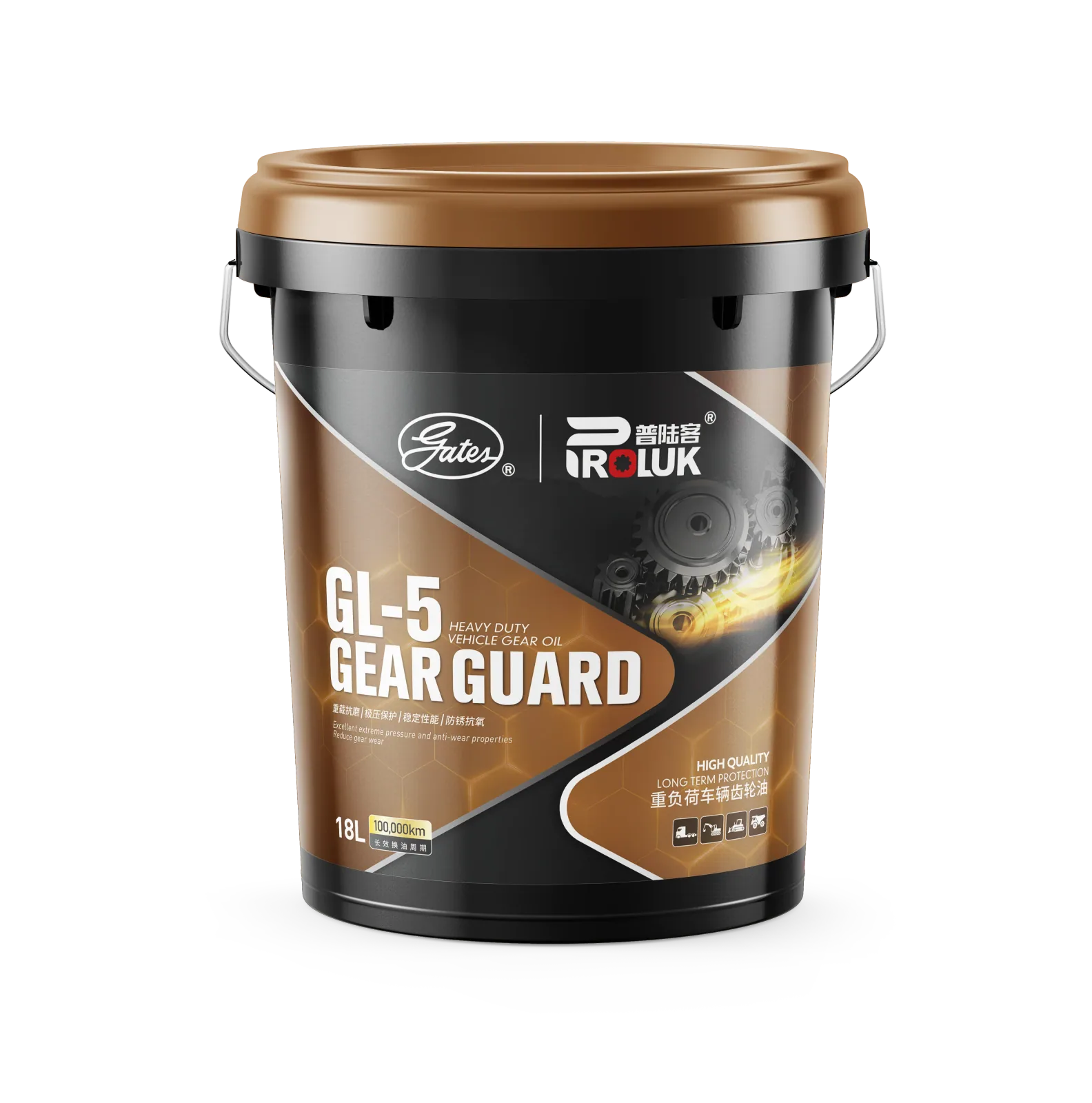
Engine oils prioritize anti-wear and friction modification for mixed lubrication regimes. Gear oils prioritize EP performance for boundary lubrication under high contact stress. Transmission fluids balance friction durability with controlled slip for clutch engagement—a different requirement entirely. The same base oil with a different additive package will deliver different wear protection. A GL-5 gear oil like GL-5 75W-90 18L carries a high EP treat rate for shock-loaded differentials, while an API CK-4 engine oil like CK-4 10W-40 18L uses a different additive balance to protect against soot-related wear and oxidation.
When selecting a lubricant for wear control, match the additive profile to the dominant wear mode. If your application experiences shock loads, specify a gear oil with proven EP performance. If it experiences sustained high-temperature operation with soot loading, specify an engine oil with robust anti-wear and dispersant chemistry.
Heat Removal and Contamination Transport: The Functions That Determine Viscosity and Detergent/Dispersant Chemistry
Heat removal and contamination transport are active functions delivered by base oil viscosity, flow characteristics, and detergent/dispersant additives—not passive benefits. Heat removal depends on base oil viscosity and flow rate. Lower-viscosity oils flow faster and remove heat more efficiently in engines, but they must still maintain a protective film at operating temperature. This is the core viscosity trade-off: too thick and you cannot remove heat fast enough; too thin and you lose film strength and sealing.
Contamination transport in engines relies on detergent additives to keep high-temperature surfaces clean and dispersants to suspend soot and sludge in the oil until it reaches the filter. A lubricant that removes heat well but cannot transport contamination will form deposits. One that transports contamination but cannot handle heat will oxidize and thicken. Both functions must be balanced by the formulation.
In gear oils and transmission fluids, contamination transport is less about combustion byproducts and more about managing wear particles and oxidation products. Dispersant chemistry is tuned accordingly. A heavy-duty gear oil like GL-5 85W-140 18L uses a different dispersant balance than an engine oil because the contaminants are metallic wear particles rather than soot.
When selecting a lubricant for heat removal and contamination transport, consider the operating temperature and the type of contamination. High-temperature engines need oils with high viscosity index and robust detergent/dispersant chemistry. Gearboxes need oils that can manage wear particles without forming sludge. Transmission fluids need a balance that maintains friction durability while transporting clutch material and oxidation products.
Sealing and Corrosion Protection: The Functions That Are Easy to Overlook but Critical for Longevity
Sealing and corrosion protection are active functions delivered by base oil properties and additive chemistry, and they influence lubricant selection for engines, gearboxes, and transmissions—especially in stop-start, high-humidity, or intermittent-duty applications. Sealing in engines and transmissions is partly a function of base oil viscosity and film thickness. A lubricant that is too thin may not seal effectively, leading to blow-by or pressure loss. Seal compatibility additives also prevent seal shrinkage or swelling, which can cause leaks.
Corrosion protection relies on corrosion inhibitor additives that form a protective film on metal surfaces, neutralizing acids from combustion or oxidation. This function is especially important in engines with high sulfur fuel, short-trip duty, or long storage periods. In gear oils and transmission fluids, corrosion protection must be balanced with EP additive chemistry, which can be corrosive if not properly inhibited. Synthetic base oils often have better natural oxidation stability and lower volatility, which indirectly supports corrosion protection by reducing acid formation—but additive chemistry remains the primary driver.
When selecting a lubricant for sealing and corrosion protection, consider the duty cycle and environment. Stop-start fleets need strong corrosion inhibitors and dispersants. Engines with high sulfur fuel need oils with high total base number (TBN) to neutralize acids. Gearboxes in humid environments need gear oils with proven corrosion protection that does not compromise EP performance.
Synthetic vs. Mineral Base Oils: A Function-Performance Comparison, Not a Marketing Claim
Synthetic base oils typically have higher viscosity indices, better low-temperature flow, and greater oxidation stability, which improves heat removal and contamination transport in high-temperature or wide-temperature-range applications. Mineral base oils can deliver adequate performance in moderate-duty applications when paired with a robust additive package, but they may require higher viscosity grades or more frequent changes to compensate for lower oxidation stability.
The same additive package in a synthetic versus mineral base oil will perform differently. Synthetics often enhance additive solubility and longevity, while minerals may require higher treat rates for equivalent function. This is not a simple "synthetic is better" conclusion. The decision depends on operating conditions, change intervals, and cost-performance trade-offs. A mineral oil with the right additive package may be the correct choice for a low-duty fleet, while a synthetic is justified for high-temperature or extended-drain applications.
When evaluating synthetic versus mineral, consider the dominant function. If heat removal and oxidation stability are critical—as in turbocharged engines or extended-drain fleets—synthetic base oils have a functional advantage. If the application is moderate-duty with frequent oil changes, a mineral oil with a robust additive package may deliver adequate performance at lower cost. For heavy-duty commercial vehicles, products like CH-4 15W-40 18L and CI-4 15W-40 18L are formulated to balance cost and performance for specific duty cycles.
Matching Lubricant Function Priorities to Real Operating Conditions
High-temperature engine duty—turbocharged, sustained load—prioritizes heat removal, oxidation stability, and deposit control. This points to a synthetic engine oil with high viscosity index and robust detergent/dispersant chemistry. Shock-loaded gearbox duty—mining, construction, heavy haul—prioritizes extreme-pressure and anti-wear performance. This points to a gear oil with a high EP additive treat rate and appropriate viscosity for the ambient and operating temperature range. Stop-start fleet duty prioritizes corrosion protection, sealing, and contamination transport. This points to a transmission fluid or engine oil with strong corrosion inhibitors and dispersants, and a viscosity that maintains film strength during frequent restarts.
The same vehicle or machine may have different function priorities in different seasons or duty cycles. A lubricant selected for moderate duty may not deliver adequate function in a new high-temperature or shock-loaded application. Revisit lubricant selection when operating conditions change significantly. For example, a fleet that adds stop-start routes in winter may need a different transmission fluid or engine oil than one that runs continuous highway miles.
When matching lubricant priorities to operating conditions, start by identifying the most severe condition the lubricant will face. Then verify that the product's base oil and additive package are formulated to handle that condition. Do not assume that a higher viscosity grade automatically provides better protection—in some cases, it can reduce heat removal and increase energy consumption.
Common Lubrication Mistakes That Degrade Function—and How to Avoid Them
Wrong viscosity: using a viscosity grade outside the manufacturer's recommendation degrades heat removal (too thick) or film strength and sealing (too thin), and can void warranties. Overdue changes: as oil oxidizes and additives deplete, corrosion protection, wear prevention, and contamination transport all degrade. Extended intervals without oil analysis are a common cause of premature failure. Incompatible top-up oils: mixing different additive chemistries can cause additive precipitation, seal swelling or shrinkage, and loss of EP or anti-wear performance. Always top up with the same specification or a confirmed compatible product. Ignoring operating condition changes: a lubricant selected for moderate duty may not deliver adequate function in a new high-temperature or shock-loaded application. Revisit selection when duty cycles change.
To avoid these mistakes, establish a lubricant specification for each application and enforce it. Use oil analysis to monitor function degradation over time. Train maintenance staff on the importance of using the correct top-up oil. And review lubricant selection whenever operating conditions change—new routes, new loads, new ambient temperatures.
From Function to Specification: A Practical Checklist for Selecting Engine Oil, Gear Oil, or Transmission Fluid
Identify the dominant function for your application. Is it heat removal for a high-temperature engine, EP for a shock-loaded gearbox, or corrosion protection for stop-start duty? Match the lubricant category to the application: engine oil for internal combustion engines, gear oil for manual transmissions and differentials, transmission fluid for automatic transmissions and hydraulic systems. Verify the specification: check the manufacturer's required API, ACEA, OEM, or other industry specification, and confirm the product's additive package and base oil type align with the dominant function. Confirm compatibility: ensure top-up oils and change intervals are compatible with the selected lubricant and operating conditions; use oil analysis to monitor function degradation over time.
For automotive lubricant buyers, fleet managers, mechanics, and distributors, this checklist provides a structured way to move from understanding lubricant functions to selecting the correct product. Start with the dominant function, match the category, verify the specification, and confirm compatibility. That sequence will prevent the most common lubrication mistakes and ensure your machinery gets the protection it needs.
Frequently Asked Questions
What is the most important function of a lubricant?
There is no single most important function—it depends on the application. In a turbocharged engine, heat removal and oxidation stability are critical. In a shock-loaded differential, extreme-pressure wear prevention dominates. Identify the dominant function for your specific machinery before selecting a lubricant.
Can I use engine oil in a gearbox or vice versa?
No. Engine oils and gear oils use different additive chemistries. Gear oils contain high levels of extreme-pressure (EP) additives that can corrode bearings in an engine. Engine oils lack the EP protection needed for shock-loaded gears. Always use the lubricant type specified for the application.
How do I know which specification my vehicle needs?
Check the owner's manual or the manufacturer's specification. It will list the required API, ACEA, or OEM specification. Match that specification to the product's label. If you are unsure, consult a lubricant supplier or use oil analysis to confirm performance.
What happens if I mix different lubricants?
Mixing different additive chemistries can cause additive precipitation, seal swelling or shrinkage, and loss of EP or anti-wear performance. Always top up with the same specification or a confirmed compatible product. If you must mix, consult a lubricant specialist.
How often should I change my lubricant?
Follow the manufacturer's recommended change interval. For severe duty—stop-start, high temperatures, heavy loads—consider shorter intervals and oil analysis to monitor function degradation. As oil oxidizes and additives deplete, all lubricant functions degrade.
Are synthetic lubricants always better than mineral?
Not always. Synthetic base oils offer better viscosity index, low-temperature flow, and oxidation stability, which benefits high-temperature or extended-drain applications. Mineral oils with a robust additive package can perform adequately in moderate-duty applications with frequent changes. The decision depends on operating conditions and cost-performance trade-offs.